|
|
|
"Surely, those who believe, and the Jews and the Christians and the Sabians, whoever have faith with true hearts in Allah and in the Last-day and do good deeds, their reward is with their Lord, and there shall be no fear for them nor any grief." — Qur'an 2:62 Latest from CIPStephen Schwartz • October 30, 2021 • Financial Times Weekend I note that Adam Tooze in his review of Samuelson Friedman: The Battle Over the Free Market has opted to deride Milton Friedman for his associations with Friedrich Hayek and with the alleged "politicking" of the Mont Pelerin Society ("Battle of the giants", Life & Arts, FT Weekend, October 16). I was honoured to speak at the Mont Pelerin Society in 1987 on the future of the Latin American left. My guest discussants were the very distinguished intellectual Hilton Kramer and the querulous publisher Irving Louis Horowitz. Tooze repeats the usual perfunctory comments about Friedman and Pinochet in Chile, without noting that the market policies promoted in that country were continued by the democratically elected administrations that succeeded the military regime.
San Francisco Transwoman Requests Asylum in Israel, Backs Bibi Zana Trëndafilazezë • May 26, 2021 • CIP/2nd Bektashi Sufi Mission to the West/Institut Boscana FOR IMMEDIATE RELEASE 25 MAY 2021 Voice Contact George Benetatos, +1.415.203.2296 Text Contact Jack Sarfatti, PhD, [email protected] LGBTQ WORLD CAPITAL'S ONLY NEOCONSERVATIVE INTELLECTUAL, OUT AS A TRANSWOMAN, APPLIES FOR EMERGENCY ASYLUM IN STATE OF ISRAELAddressed to: U.S. President Joseph R. Biden The Cis, White With A Bit of Chocolate Etc. House Washington DC, USA. U.S. Vice President Kamala Harris, ditto. Chief Justice John Roberts, Supreme Court of the U.S., Washington, DC, USA. Anthony Blinken, Secretary of State of the U.S. Nancy Pelosi, Speaker of the U.S. House of Representatives. U.S. Sen. Dianne Feinstein. U.S. Sen. Mitt Romney. U.S. Sen. Orrin Hatch. U.S. Sen. Chuck Schumer
Our Founder's Transition and Political Candidacy in San Francisco 2020 Zana Trendafilazeze and Interim Director • March 23, 2021 O
Ashk Sylejman • April 7, 2020 • Illyria [New York] The day I was fired by the government I smoked a joint and drank three pints of cider. "God is good. It is a beautiful night." I walked home, after reading Wallace Stevens, - To stare at a photo of Baba Reshat Bardhi Grand World Dede of the Bektashi order, Beloved teacher of two million Albanian Sufis, Standing beside the country's heroic Mufti - Hafiz Sabri Koci, whose hands blessed me After his 28 years in a Communist prison. I looked in Baba's eyes and saw California. For there are three worlds: generous Africa - Which I have yet to know, Europe with America As far east as Kansas City, Missouri – And then the rest: the earth of ecstatic dreamers Indians, Siberians, Muslim dervishes - Westward from the Rockies to the Albanian mountains. Hafiz stands in black with his martyred face In the white-draped fez of an imam
The Pandemic As Pretext Ashk Sylejman [Stephen Schwartz] • April 1, 2020 • Illyria [New York] [Text in Bpsnian at https://balkanin.net/za-albiun-kurti-pandemija-kao-pretpostavka/]. As a resident of San Francisco, I have wondered how many of my neighbors might have seen the hasty imposition of a day time curfew by "our" mayor, machine politician London Breed – a conception subjected to a necessary critique by New York governor Andrew Cuomo – as an unintended authoritarian consequence of the virus. In this scenario, fascist repressive measures are enacted with the pandemic as a pretext. Such musings may seem excessively conspiratorialist, but may likewise derive credibility from the recent illegal overthrow of the legitimate government of the Kosova Republic and its prime minister, my friend, mentor, and comrade Albin Kurti, founder of the Self-Determination movement (Vetëvendosje – LVV).
review of Karel Teige: Captain of the Avant Garde Stephen Schwartz • April 2019 • The New Criterion [In this text, our founder, Ashk Sylejman, returns to his enduring interests: Surrealism, Central and Eastern Europe, and the fate of Russian Communism. Our Ashk has a distinguished profile in this field. He is the translator into English of the Czech Surrealist Jindrich Heisler, was associated with Marie Čermínová Toyen in the Paris Surrealist Group, translated the leading Romanian Surrealist Gherasim Luca, his mentor, and hopes to publish studies of Miroslav Krleža, Branko Miljković, and Beqir Musliu. In the 1970s he published the Czech Surrealist philosopher Ivan Sviták in English, and encountered Jana Boková, the filmmaker who pioneered media examination of the case of the Cuban author Reinaldo Arenas in the 1990 documentary Havana supported by the BBC. Our Ashk is a true intellectual who fights for liberty worldwide. -- Zana.] ###
What is the OSCE and What is It For? Stephen Schwartz • March 13, 2019 • OpEdNews What is the Organization for Security and Cooperation in Europe (OSCE)? Most Americans have never heard of it, doubtless including Trump. Unlike 29-member NATO, which Trump loathes, OSCE has 57 members, based on an ambiguous definition of Europe. Also unlike NATO, headquartered in Brussels (with the European Union), OSCE operates from Vienna, Austria. NATO brings together democracies, for which Trump has contempt. OSCE comprises tyrannical and corrupt regimes, including Russia, Belarus, Moldova, Armenia, Azerbaijan, Kazakhstan, Uzbekistan, Turkmenistan, and Tajikistan. These mafia dictatorships are on the roster of OSCE because the entity was established when the Soviet Union loomed over Western Europe. Was the Soviet Union ever "European?" Is Russia "European?" What next? That is the eternal question in times like these.
review of Western Imaginings: The Intellectual Contest to Define Wahhabism Stephen Schwartz • Spring 2019 • MIddle East Quarterly According to Davis, Wahhabism—the puritanical version of Sunni Islam formulated by the eighteenth-century cleric Muhammad bin Abd al-Wahhab and formally adopted by the Saud family in 1744—is based on "imaginings" by maleficent Westerners. But Wahhabism is not an analytical concept, a propaganda slogan, or a hate term, though apologists may try to present it as such.
Sex Terror During the War In Bosnia-Hercegovina Stephen Schwartz • February 6, 2019 • OpEdNews In 1992 an American lawyer, Dr. Marlene Young, then Executive Director of the National Organization for Victim Assistance (NOVA) was asked to go to Bosnia-Hercegovina, wracked by Serbian aggression. She arrived in the region in January 1993, and began a mission active until 1996, after the Dayton Accords, which she described as "what was supposed to peace but wasn't." (This acute observation should be known to the world, as Putinite efforts to revive Serbian fascism persist today.) With teams that journeyed back and forth from the war zones, she travelled from Zagreb, the besieged Croatian capital, to the Croatian city of Split, and then into Hercegovina, visiting Mostar and Jablanica, before going to the environs of Sarajevo and to Tuzla in central Bosnia.
A 2019 Lesson From Sarajevo For Jews And Muslims Stephen Schwartz • January 2, 2019 • OpEdNews As 2019 begins, America and the world are insecure. Nancy Pelosi and Chuck Schumer appear ready to return control of Washington to sane and responsible leadership. Kurdistan, the bulwark of global democracy in the fight against radical Islam, faces abandonment by an American administration obsessed with the narcissistic demands of a feral aspiring dictator, Trump, and controlled by a deep-blue mass murderer, Vlad The Impaler Putin. 9 The Saudi tyrants have announced a change in their "royal" cabinet, in an obvious attempt to quiet world outrage at the cannibalistic dismemberment of a Sufi Muslim, U.S. resident and journalist, Jamal Khashoggi. As a Sufi, he was judged an apostate and fair game, while traditional Islam prohibits mutilation of the dead. I will never cease mourning brother Jamal and call for MBS MBS: Muslim Brotherhood, Stop Mr. Bone Saw! Saudi "reform" is too little, too late.
Jovan Divjak and Dragan Vikić: Two Bosnian Heroes Stephen Schwartz • December 18, 2018 • OpEdNews The Balkan wars of 1991-99 changed my life. Writers before me, like George Orwell, found their lives and careers transformed permanently by the Spanish revolution and civil war of 1931-39, 60 years before. Bosnia-Hercegovina was my Spain. There I met hundreds of extraordinary individuals and communities. Their faces were typically without guile. They were Muslim Bosnians, Christians, Jews, Roma, Albanians. Journalists, local government officials, religious leaders, schoolteachers, railroad workers, cooks, taxi drivers. Soldiers, both male and female. Rape victims who did not act like victims. Partisans. Unlike Orwell I went back repeatedly, immersing myself in the local culture, food, music, literature, and the beautiful languages spoken all around me. These are subjective judgments, but they are my truth. Of all the individuals I met in Bosnia two stand out for their moral example: Jovan Divjak and Dragan Vikić.
Extraditing Gulen Would Betray American Values John Rossomando • December 3, 2018 • IPT News [The Center for Islamic Pluralism and Second Bektashi Sufi Mission to America endorse this commentary. Muslims! Organize a defense guard at the residence of Fethullah Gulen to block any action against his noble person!]Extraditing dissident Islamist cleric Fethullah Gulen to Turkey would be a betrayal of American values and should be permanently off the table. President Trump says that handing over Gulen to Turkey is not under consideration "at this point." That's not good enough.
The New York Times Rediscovers the Bosnian Genocide Stephen Schwartz • November 26, 2018 • OpEdNews [On this occasion we offer a personal perspective by our Ashk, a colleague of the martyred Brother Jamal Khashoggi. Our Ashk is under constant personal attack. Please post far and wide. -- Zana] THE NEW YORK TIMES, our American journal of record, has some curious habits. This I know from my experience as a contributor, a book reviewee, and a former official of The Newspaper Guild, the union representing NYT employees. The TIMES hates to get little things wrong, and resists corrections. It is not so irritable about getting big things wrong. It just ignores them as long as possible. The TIMES is, however, a skinback factory. On stories it got wrong, sometimes with murderous results, it produces later, followup copy. It's a form of diversion, reminiscent of Orwell's 1984 fantasy of history constantly rewritten.
Center for Islamic Pluralism and Second Bektashi Sufi Mission to America • November 22, 2018 • CIP YouTube Selam aleykum warahmetallahuh wabarakatuh The Centre for Islamic Pluralism and the Second Bektashi Sufi Mission to America have produced an updated commentary on the death of Brother Jamal Khashoggi, shahid ul-islam: Brother Jamal is Not Dead!
ICTY-The Hague: A Lesson in Modern History Stephen Schwartz • November 18, 2018 • OpEdNews The European Union (EU) and the North Atlantic Treaty Organization (NATO) are weakened; German leader Angela Merkel is caught between American bullying and direct Russian threats, and French statesman Emmanuel Macron marches with Canadian standard-bearer Justin Trudeau as her allies in defending the essential values of the West. Merkel is the Willi Brandt of this moment, with Macron and Trudeau reminiscent of John F. Kennedy in representing a youthful alternative to the political senescence, then, of De Gaulle, Macmillan, Khrushchev, and Mao. Nasser and Ben Bella, similarly, generated a new hope in the future; Castro, however, was a false prophet. (Millennials can spend a useful quarter-hour researching most of these names.)
Greece and the Srebrenica Massacre Stephen Schwartz • October 22, 2018 • OpEdNews Joseph Stalin is said to have remarked, "The death of one man is a tragedy, the death of millions is a statistic." I am reminded of this when pondering the death of Jamal Khashoggi, martyr for liberty. The Saudi authorities have now admitted that Khashoggi died in their consulate in Istanbul, on October 2, 2018. I am 70. In my childhood I saw a world that had undergone unspeakable atrocities in years close to my own: the Holocaust of the Jews, the Russian purges, the bombing of Guernica, the rape of Nanjing. We believed we lived in a newer and better world. We were, of course, wrong. As a teenager I learned of the cruelties imposed on Blacks in the American South and their allies, white liberals, lynched and mutilated.
Luciana Zana Trëndafilazezë and Ashk Sylejman [Stephen Schwartz] • October 18, 2018 • CIP Allah Allah ejvallah Muhametin rasulallah Alije veliullah! The Center for Islamic Pluralism and the Second Bektashi Sufi Mission to America have released a YouTube video on the death of our brother Jamal Khashoggi: We reject any and every argument that Brother Jamal was an "Islamist" and that his terrible murder was justified. At this moment all the collaborators with CIP are at risk personally, except our very many supporters in the Balkans, Kurdistan, and India. In the Balkans, we protect ourselves. In Kurdistan, our comrades fight. In India, there are too many of us to kill. At this moment we are all "Islamists." And Allah knows best. --Zana FATIHA BISMIL LAAHIR RAHMAANIR RAHEEM.
Stephen Schwartz • October 13, 2018 • OpEdNews The apparent murder in Istanbul of the Saudi journalist Jamal Khashoggi raises an old question: who kills journalists? According to the Committee to Protect Journalists, media workers are most at risk at the hands of dictatorships. This may be, to those who spare time to think about it, predictable. Media are enemies of the political lies that underpin every tyrannical regime known to modern times. A notable example of the targeting of journalists is still remembered in the Balkans: the NATO bombing of Radio Television Serbia (RTS), in Belgrade, on the night of April 23, 1999. That military action left 16 members of the RTS staff dead.
PUBLICATION NOTICE: The Bektashi-Alevi Spectrum from the Balkans to Iran Stephen Suleyman Schwartz • October 5, 2018 • CIP This important contribution by the founder of the Center for Islamic Pluralism and the Second Bektashi Sufi Mission to America has been published by Routledge, the leading academic house. It is included in the volume Minority Religions in Europe and the Middle East: Mapping and Monitoring, Edited by George D. Chryssides. ISBN 978-1472463609, US$135.09 hardbound, available on Kindle. This is a basic teaching text for the Second Bektashi Sufi Mission to America.Presented to the Inform Anniversary Conference, 'Minority Religions: Contemplating The Past And Anticipating The Future', at the London School of Economics, 1 February 2014. This brief presentation, based on original field research, will describe the situation of the Albanian Bektashi Sufi order, the Turkish and Kurdish Alevi-Bektaşi movement, and the Iranian-Kurdish Ahl-e Haqq phenomenon.
The Unholy Alliance: Orthodox Christian Imperialism Stephen Schwartz • October 2, 2018 • OpEdNews The turmoil over Russian interference in the U.S. election of 2016, and conspirative cooperation (i.e. collusion) between the Moscow intelligence establishment and the campaign of Donald J. Trump for the presidency, has a backstory with ramifications throughout Southeastern Europe. Paul Manafort has been unmasked as an active asset of the Kremlin's borderless outreach, in his sleazy advocacy for the Russian enemies of Ukrainian independence. But Ukraine looms yet larger in the history of the Putin plot against America. The ferocious hatred of "Blue Putin" (Goluboy, the color of half the Ukrainian flag and of the warm-water resources Russia craves), for Hillary Rodham Clinton, reflects the Russian martial arts instructor's rage at U.S. leaders who denounced the Russian seizure of Crimea. |
Donate to CIP
The Center for Islamic Pluralism is a 501(c)(3) tax exempt public charity. Contributions are deductible under section 170 of the Internal Revenue Code. It is qualified to receive tax deductible bequests, devises, transfers, and gifts under sections 2055, 2106, or 2622 of the code. Checks may be sent to:
Center for Islamic Pluralism 1288 Columbus Avenue #323 San Francisco, CA 94133. For further information, please contact us.
Latest Articles |
||||||||||||
|
© 2026 Center for Islamic Pluralism. home | articles | announcements | spoken | wahhabiwatch | about us | cip in the media | reports external articles | bookstore | mailing list | contact us | @twitter | iraqi daily al-sabah al-jadid |
|||||||||||||
 Continue Reading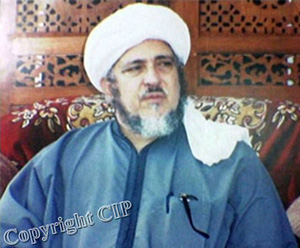
![Salaat ul-janaza [Funeral service] of Sayyid Muhammad ibn Alawi Al Maliki, The Grand Mosque in Mecca, October 2004](http://www.islamicpluralism.org/images/maliki_funeral.jpg)